










EBOOK IN LINGUA STRANIERA





Math for Programmers

56,37 €
+560
punti 
Venditore: Feltrinelli

Acquista online
Scaricabile subito
Articolo acquistabile con Carta del Docente

Articolo acquistabile con Carta Cultura Giovani e Carta del Merito

Articolo acquistabile con Carta della Cultura

Dati e Statistiche
 Salvato in 0 liste dei desideri
Salvato in 0 liste dei desideri
Math for Programmers
Scaricabile subito
56,37 €
56,37 €
Scaricabile subito
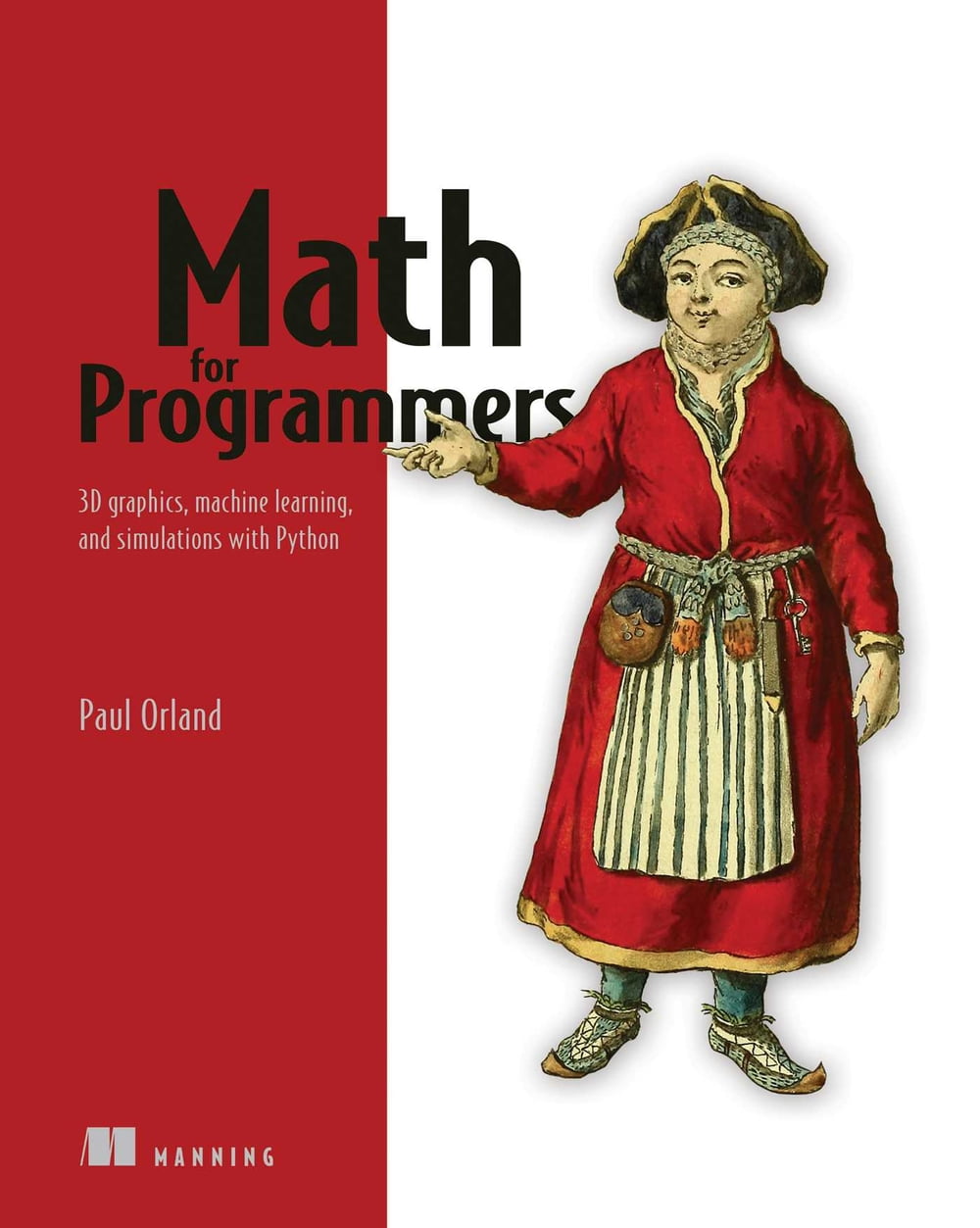


**"A gentle introduction to some of the most useful mathematical concepts that should be in your developer toolbox." - Christopher Haupt, New Relic Explore important mathematical concepts through hands-on coding. Purchase of the print book includes a free eBook in PDF, Kindle, and ePub formats from Manning Publications.** Filled with graphics and more than 300 exercises and mini-projects, this book unlocks the door to interesting–and lucrative!–careers in some of today’s hottest fields. As you tackle the basics of linear algebra, calculus, and machine learning, you’ll master the key Python libraries used to turn them into real-world software applications. Summary To score a job in data science, machine learning, computer graphics, and cryptography, you need to bring strong math skills to the party. Math for Programmers teaches the math you need for these hot careers, concentrating on what you need to know as a developer. Filled with lots of helpful graphics and more than 200 exercises and mini-projects, this book unlocks the door to interesting–and lucrative!–careers in some of today’s hottest programming fields. About the technology Skip the mathematical jargon: This one-of-a-kind book uses Python to teach the math you need to build games, simulations, 3D graphics, and machine learning algorithms. Discover how algebra and calculus come alive when you see them in code! What's inside Vector geometry for computer graphics Matrices and linear transformations Core concepts from calculus Simulation and optimization Image and audio processing Machine learning algorithms for regression and classification About the reader For programmers with basic skills in algebra. About the author Paul Orland is a programmer, software entrepreneur, and math enthusiast. He is co-founder of Tachyus, a start-up building predictive analytics software for the energy industry. You can find him online at www.paulor.land. Table of Contents 1 Learning math with code PART I - VECTORS AND GRAPHICS 2 Drawing with 2D vectors 3 Ascending to the 3D world 4 Transforming vectors and graphics 5 Computing transformations with matrices 6 Generalizing to higher dimensions 7 Solving systems of linear equations PART 2 - CALCULUS AND PHYSICAL SIMULATION 8 Understanding rates of change 9 Simulating moving objects 10 Working with symbolic expressions 11 Simulating force fields 12 Optimizing a physical system 13 Analyzing sound waves with a Fourier series PART 3 - MACHINE LEARNING APPLICATIONS 14 Fitting functions to data 15 Classifying data with logistic regression 16 Training neural networks
-
Autore:
-
Anno edizione:2020
-
Editore:
-
Formato:
-
Lingua:Inglese
Compatibilità:
Tutti i dispositivi (eccetto Kindle) Scopri di più
Layout:
Reflowable
EAN:
9781638357070

Formato:
Gli eBook venduti da Feltrinelli.it sono in formato ePub e possono essere protetti da Adobe DRM. In caso di download di un file protetto da DRM si otterrà un file in formato .acs, (Adobe Content Server Message), che dovrà essere aperto tramite Adobe Digital Editions e autorizzato tramite un account Adobe, prima di poter essere letto su pc o trasferito su dispositivi compatibili.
Cloud:
Gli eBook venduti da Feltrinelli.it sono sincronizzati automaticamente su tutti i client di lettura Kobo successivamente all’acquisto. Grazie al Cloud Kobo i progressi di lettura, le note, le evidenziazioni vengono salvati e sincronizzati automaticamente su tutti i dispositivi e le APP di lettura Kobo utilizzati per la lettura.
Clicca qui per sapere come scaricare gli ebook utilizzando un pc con sistema operativo Windows
