










LIBRO INGLESE





Nuclear Magnetic Resonance

72,60 €
+730
punti 
Venditore: Feltrinelli
Articolo acquistabile con Carta del Docente

Articolo acquistabile con Carta Cultura Giovani e Carta del Merito

Articolo acquistabile con Carta della Cultura

Paga con Klarna in 3 rate senza interessi per ordini superiori a 39 €

Dati e Statistiche
 Salvato in 0 liste dei desideri
Salvato in 0 liste dei desideri
Nuclear Magnetic Resonance
Disponibilità in 2 settimane
72,60 €
72,60 €
Disponibilità in 2 settimane

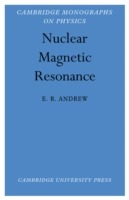



Like the earth itself, the nucleus of an atom frequently rotates about an axis. Under the influence of a magnetic field the axis of rotation itself rotates. The rate of this 'precessional' motion is proportional to the strength of the magnetic field and usually lies in the region of radio-frequencies. If a collection of such nuclei is placed in a magnetic field is subjected to radio waves at exactly the frequency of precession, there is a resonance effect, which can be used to measure the frequency of the precession. This effect is called nuclear magnetic resonance. The subject concerns all physicists, particularly nuclear physicists and those interested in the solid state. It is of growing importance to chemists, metallurgists and electrical engineers and there have been some biological and geophysical applications. Nuclear magnetic resonance has already found considerable uses in the oil industry, in industries connected with magnet construction, isotope extraction, plastics and rubber.
-
Autore:
-
Editore:
-
Collana:Cambridge Monographs on Physics
-
Anno:2009
-
Rilegatura:Paperback / softback
-
Pagine:280 p.
Testo in English
Dimensioni:
216 x 140 mm
Peso:
360 gr.
EAN:
9780521114332

Informazioni e Contatti sulla Sicurezza dei Prodotti
Le schede prodotto sono aggiornate in conformità al Regolamento UE 988/2023. Laddove ci fossero taluni dati non disponibili per ragioni indipendenti da Feltrinelli, vi informiamo che stiamo compiendo ogni ragionevole sforzo per inserirli. Vi invitiamo a controllare periodicamente il sito www.lafeltrinelli.it per eventuali novità e aggiornamenti.
Per le vendite di prodotti da terze parti, ciascun venditore si assume la piena e diretta responsabilità per la commercializzazione del prodotto e per la sua conformità al Regolamento UE 988/2023, nonché alle normative nazionali ed europee vigenti.
Per informazioni sulla sicurezza dei prodotti, contattare productsafety@feltrinelli.it
