










EBOOK IN LINGUA STRANIERA





Protein-Nanoparticle Interactions

84,23 €
+840
punti 
Venditore: Feltrinelli

Acquista online
Scaricabile subito
Articolo acquistabile con Carta del Docente

Articolo acquistabile con Carta Cultura Giovani e Carta del Merito

Articolo acquistabile con Carta della Cultura

Dati e Statistiche
 Salvato in 0 liste dei desideri
Salvato in 0 liste dei desideri
Protein-Nanoparticle Interactions
Scaricabile subito
84,23 €
84,23 €
Scaricabile subito

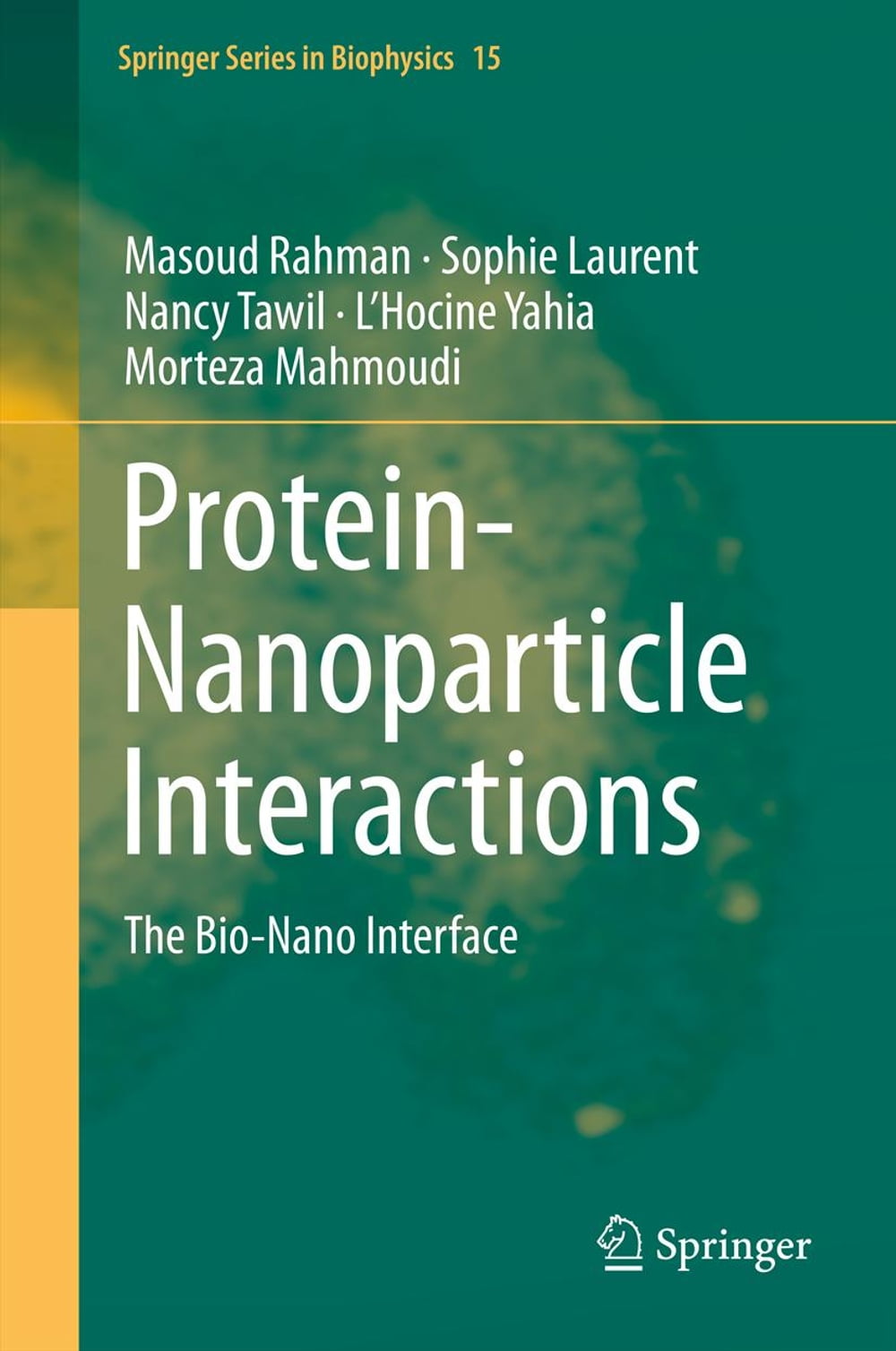



In recent years, the fabrication of nanomaterials and exploration of their properties have attracted the attention of various scientific disciplines such as biology, physics, chemistry, and engineering. Although nanoparticulate systems are of significant interest in various scientific and technological areas, there is little known about the safety of these nanoscale objects. It has now been established that the surfaces of nanoparticles are immediately covered by biomolecules (e.g. proteins, ions, and enzymes) upon their entrance into a biological medium. This interaction with the biological medium modulates the surface of the nanoparticles, conferring a “biological identity” to their surfaces (referred to as a “corona”), which determines the subsequent cellular/tissue responses. The new interface between the nanoparticles and the biological medium/proteins, called “bio-nano interface,” has been very rarely studied in detail to date, though the interest in this topic is rapidly growing. In this book, the importance of the physiochemical characteristics of nanoparticles for the properties of the protein corona is discussed in detail, followed by comprehensive descriptions of the methods for assessing the protein-nanoparticle interactions. The advantages and limitations of available corona evaluation methods (e.g. spectroscopy methods, mass spectrometry, nuclear magnetic resonance, electron microscopy, X-ray crystallography, and differential centrifugal sedimentation) are examined in detail, followed by a discussion of the possibilities for enhancing the current methods and a call for new techniques. Moreover, the advantages and disadvantages of protein-nanoparticle interaction phenomena are explored and discussed, with a focus on the biological impacts.
-
Autore:
-
Anno edizione:2013
-
Editore:
-
Formato:
-
Lingua:Inglese
Compatibilità:
Tutti i dispositivi (eccetto Kindle) Scopri di più
Layout:
Reflowable
EAN:
9783642375552

Formato:
Gli eBook venduti da Feltrinelli.it sono in formato ePub e possono essere protetti da Adobe DRM. In caso di download di un file protetto da DRM si otterrà un file in formato .acs, (Adobe Content Server Message), che dovrà essere aperto tramite Adobe Digital Editions e autorizzato tramite un account Adobe, prima di poter essere letto su pc o trasferito su dispositivi compatibili.
Cloud:
Gli eBook venduti da Feltrinelli.it sono sincronizzati automaticamente su tutti i client di lettura Kobo successivamente all’acquisto. Grazie al Cloud Kobo i progressi di lettura, le note, le evidenziazioni vengono salvati e sincronizzati automaticamente su tutti i dispositivi e le APP di lettura Kobo utilizzati per la lettura.
Clicca qui per sapere come scaricare gli ebook utilizzando un pc con sistema operativo Windows
