









LIBRO INGLESE





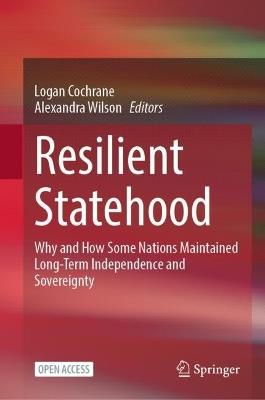
Resilient Statehood: Why and How Some Nations Maintained Long-Term Independence and Sovereignty


49,49 €
+490
punti 
Venditore: Feltrinelli
Articolo acquistabile con Carta del Docente

Articolo acquistabile con Carta Cultura Giovani e Carta del Merito

Articolo acquistabile con Carta della Cultura

Paga con Klarna in 3 rate senza interessi per ordini superiori a 39 €

Dati e Statistiche
 Salvato in 0 liste dei desideri
Salvato in 0 liste dei desideri
Resilient Statehood: Why and How Some Nations Maintained Long-Term Independence and Sovereignty
Disponibilità in 3 settimane
49,49 €
49,49 €
Disponibilità in 3 settimane
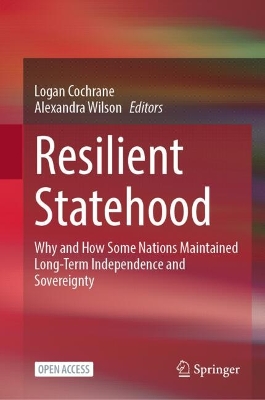


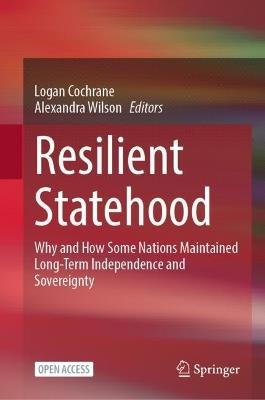
This open access book makes an important and original contribution in shifting the analytical lens from 'empires' to the agency of 'resilient states'. Employing a comparative framework, which highlights strategies such as diplomacy, selective modernization, and national identity, the book provides a novel and accessible way to understand how certain states maintained sovereignty. Few countries have remained independent over the last 600 years. While many books have sought to understand why and how expansionist efforts occurred, none has turned that question around, seeking answers to why and how some nations remained independent. This book brings several (but not all) of these countries together, in one collection, capturing other histories. It presents chapters on eight countries: Afghanistan, Bhutan, Ethiopia, Iran, Japan, Mongolia, Nepal, and Thailand, from 1400 to the present, and collates their historical trajectories in independence, outlining key commonalities, and differences. It is relevant to scholars in political science, development studies, decolonial and post-colonial studies, history, and international relations.
-
Curatore:
-
Editore:
-
Anno:2026
-
Rilegatura:Hardback
Pagine:
169 p.
Testo in English
Dimensioni:
235 x 155 mm
EAN:
9789819202201

Informazioni e Contatti sulla Sicurezza dei Prodotti
Le schede prodotto sono aggiornate in conformità al Regolamento UE 988/2023. Laddove ci fossero taluni dati non disponibili per ragioni indipendenti da Feltrinelli, vi informiamo che stiamo compiendo ogni ragionevole sforzo per inserirli. Vi invitiamo a controllare periodicamente il sito www.lafeltrinelli.it per eventuali novità e aggiornamenti.
Per le vendite di prodotti da terze parti, ciascun venditore si assume la piena e diretta responsabilità per la commercializzazione del prodotto e per la sua conformità al Regolamento UE 988/2023, nonché alle normative nazionali ed europee vigenti.
Per informazioni sulla sicurezza dei prodotti, contattare productsafety@feltrinelli.it
