









EBOOK IN LINGUA STRANIERA





Social Self-Organization

131,03 €
+1310
punti 
Venditore: Feltrinelli

Acquista online
Scaricabile subito
Articolo acquistabile con Carta del Docente

Articolo acquistabile con Carta Cultura Giovani e Carta del Merito

Articolo acquistabile con Carta della Cultura

Dati e Statistiche
 Salvato in 0 liste dei desideri
Salvato in 0 liste dei desideri
Social Self-Organization
Scaricabile subito
131,03 €
131,03 €
Scaricabile subito
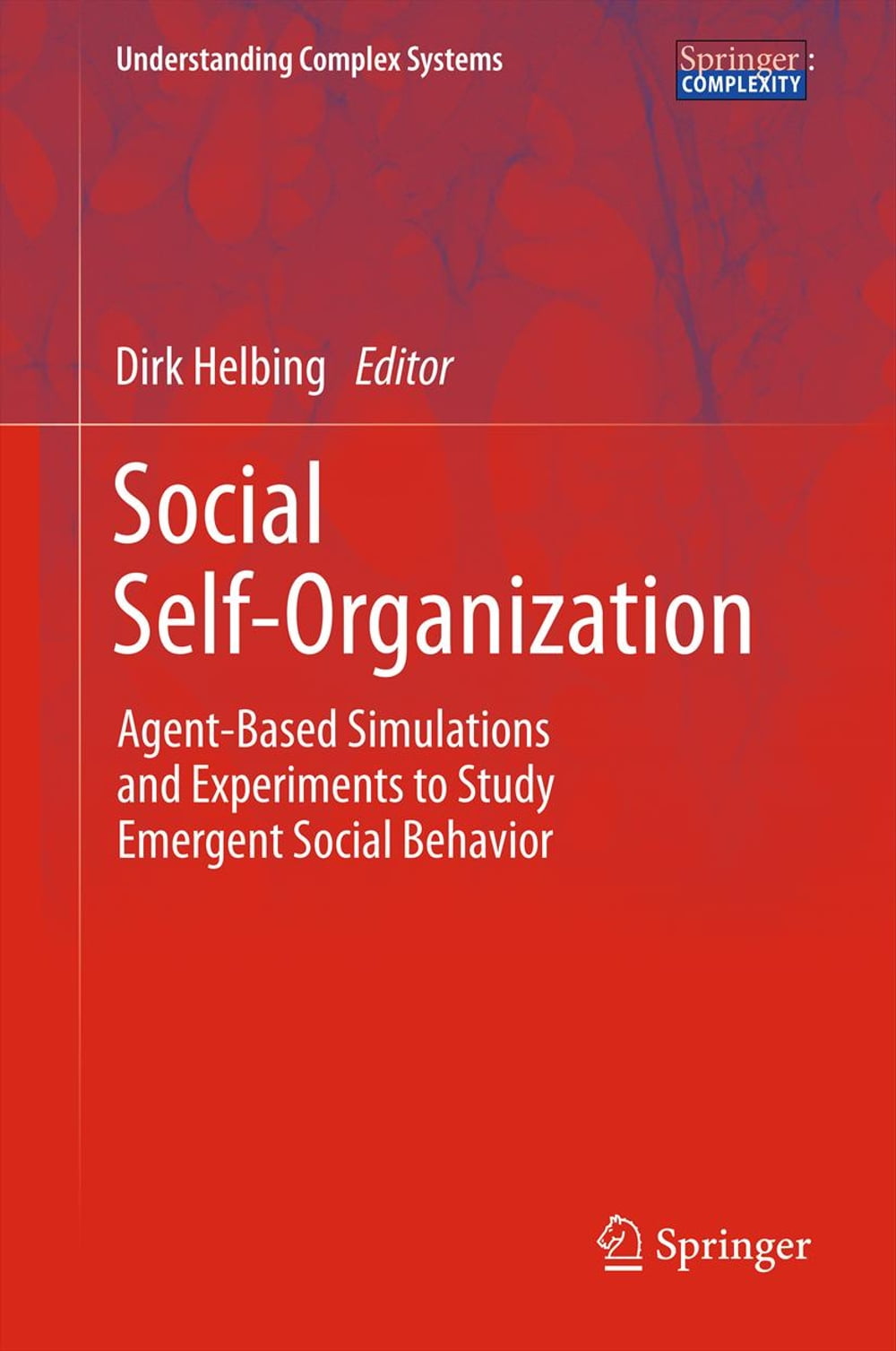


What are the principles that keep our society together? This question is even more difficult to answer than the long-standing question, what are the forces that keep our world together. However, the social challenges of humanity in the 21st century ranging from the financial crises to the impacts of globalization, require us to make fast progress in our understanding of how society works, and how our future can be managed in a resilient and sustainable way. This book can present only a few very first steps towards this ambitious goal. However, based on simple models of social interactions, one can already gain some surprising insights into the social, ``macro-level'' outcomes and dynamics that is implied by individual, ``micro-level'' interactions. Depending on the nature of these interactions, they may imply the spontaneous formation of social conventions or the birth of social cooperation, but also their sudden breakdown. This can end in deadly crowd disasters or tragedies of the commons (such as financial crises or environmental destruction). Furthermore, we demonstrate that classical modeling approaches (such as representative agent models) do not provide a sufficient understanding of the self-organization in social systems resulting from individual interactions. The consideration of randomness, spatial or network interdependencies, and nonlinear feedback effects turns out to be crucial to get fundamental insights into how social patterns and dynamics emerge. Given the explanation of sometimes counter-intuitive phenomena resulting from these features and their combination, our evolutionary modeling approach appears to be powerful and insightful. The chapters of this book range from a discussion of the modeling strategy for socio-economic systems over experimental issues up the right way of doing agent-based modeling. We furthermore discuss applications ranging from pedestrian and crowd dynamics over opinion formation, coordination, and cooperationup to conflict, and also address the response to information, issues of systemic risks in society and economics, and new approaches to manage complexity in socio-economic systems. Selected parts of this book had been previously published in peer reviewed journals.
-
Curatore:
-
Anno edizione:2012
-
Editore:
-
Formato:
Lingua:
Inglese
Compatibilità:
Tutti i dispositivi (eccetto Kindle) Scopri di più
Layout:
Reflowable
EAN:
9783642240041

Formato:
Gli eBook venduti da Feltrinelli.it sono in formato ePub e possono essere protetti da Adobe DRM. In caso di download di un file protetto da DRM si otterrà un file in formato .acs, (Adobe Content Server Message), che dovrà essere aperto tramite Adobe Digital Editions e autorizzato tramite un account Adobe, prima di poter essere letto su pc o trasferito su dispositivi compatibili.
Cloud:
Gli eBook venduti da Feltrinelli.it sono sincronizzati automaticamente su tutti i client di lettura Kobo successivamente all’acquisto. Grazie al Cloud Kobo i progressi di lettura, le note, le evidenziazioni vengono salvati e sincronizzati automaticamente su tutti i dispositivi e le APP di lettura Kobo utilizzati per la lettura.
Clicca qui per sapere come scaricare gli ebook utilizzando un pc con sistema operativo Windows
