









EBOOK IN LINGUA STRANIERA





Trust in Science

Omaggio
Venditore: Feltrinelli

Acquista online
Scaricabile subito
Articolo acquistabile con Carta del Docente

Articolo acquistabile con Carta Cultura Giovani e Carta del Merito

Articolo acquistabile con Carta della Cultura

Dati e Statistiche
 Salvato in 0 liste dei desideri
Salvato in 0 liste dei desideri
Trust in Science
Scaricabile subito
Omaggio
Omaggio
Scaricabile subito



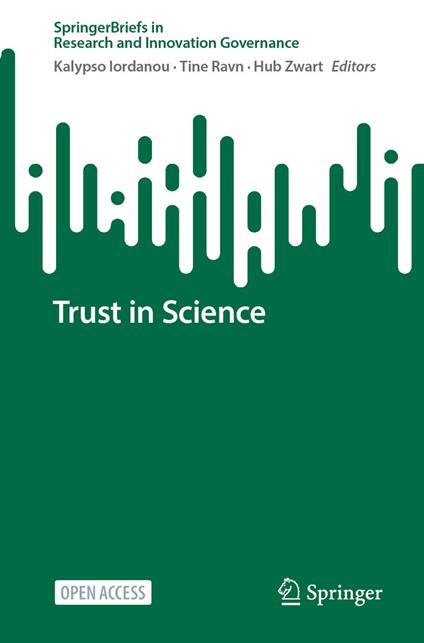
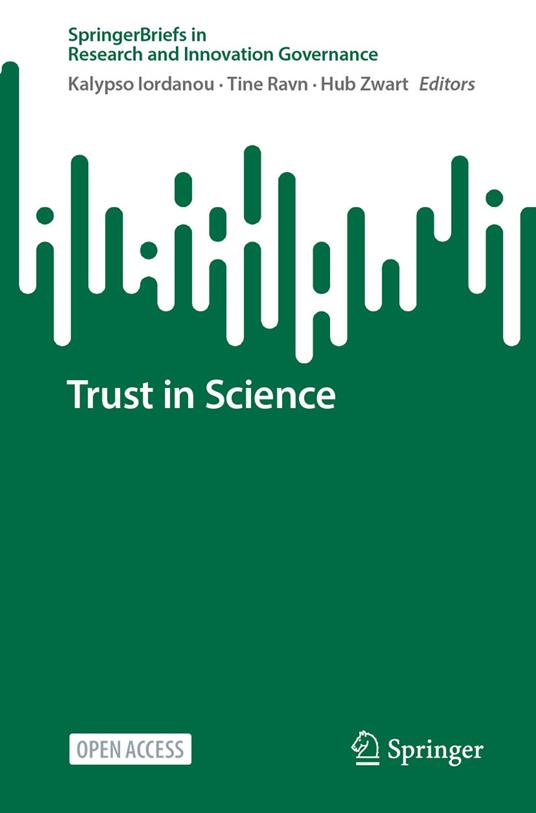
This open access book proposes that Europe has something to offer in the current landscape, namely decades of experience when it comes to addressing societal, ethical, and regulatory challenges of technoscientific change. Science is experiencing unprecedented turbulence as US government officials and Big Tech CEOs actively undermine its authority, particularly when scientific findings conflict with economic interests and power dynamics in polarized policy debates. At this time when Europe is closely monitoring what is happening "across the Pond" and struggles to position itself between giant technoscientific superpowers, researchers from three European projects joined forces to examine Science and Society's role and their interrelationship in addressing global challenges. In this Springer Brief, the authors ask core questions about Trust in Science: Are we indeed facing a trust crisis, as some sources suggest? Should science be trusted, or rather: should trust in science be promoted, and if so on what grounds? If fostering trust in science is a worthwhile and valid objective, how can it be achieved? The authors contend that through participatory research methodologies, "European sciences" have the opportunity to strengthen their responsiveness to societal values, priorities, and concerns." Hub Zwart (1960) studied philosophy and psychology at Radboud University Nijmegen (The Netherlands) and defended his thesis in 1993. In 2000, he became full professor of Philosophy at the Faculty of Science RU Nijmegen. In 2018, he was appointed as the dean of Erasmus School of Philosophy (Erasmus University Rotterdam). He is an editor-in-chief of the Library for Ethics and Applied Philosophy (Springer). His research develops a philosophical (dialectical) perspective on contemporary technoscience. Special attention is devoted to the dialectical relationship between science and genres of the imagination (drama, poetry, cinema, novels, music). In 2017, he published Tales of Research Misconduct (Springer Nature, open access) and in 2022 Continental Philosophy of Technoscience (Springer Nature, open access).
-
Curatore:
-
Anno edizione:2026
-
Editore:
-
Formato:
Lingua:
Inglese
Compatibilità:
Tutti i dispositivi (eccetto Kindle) Scopri di più
Layout:
Reflowable
EAN:
9783032157232

Formato:
Gli eBook venduti da Feltrinelli.it sono in formato ePub e possono essere protetti da Adobe DRM. In caso di download di un file protetto da DRM si otterrà un file in formato .acs, (Adobe Content Server Message), che dovrà essere aperto tramite Adobe Digital Editions e autorizzato tramite un account Adobe, prima di poter essere letto su pc o trasferito su dispositivi compatibili.
Cloud:
Gli eBook venduti da Feltrinelli.it sono sincronizzati automaticamente su tutti i client di lettura Kobo successivamente all’acquisto. Grazie al Cloud Kobo i progressi di lettura, le note, le evidenziazioni vengono salvati e sincronizzati automaticamente su tutti i dispositivi e le APP di lettura Kobo utilizzati per la lettura.
Clicca qui per sapere come scaricare gli ebook utilizzando un pc con sistema operativo Windows
